Sigiriya, Sri Lanka: The Extraordinary Story of an Ancient Kingdom, Royal Ambition and Engineering Genius
Discover the history, hidden stories, architectural wonders and ancient technology of Sri Lanka’s legendary Lion Rock and experience it with LionPeak Experiences.
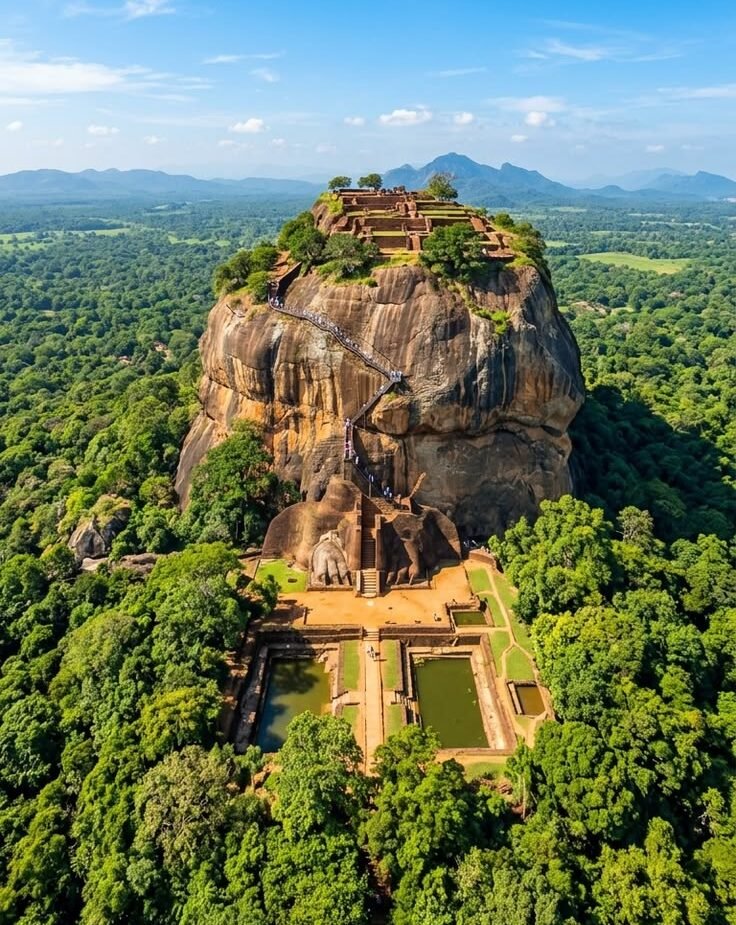
Imagine standing before a gigantic rock rising above a vast green forest. Its steep walls glow in the morning sunlight. Ancient gardens stretch across the landscape, and a staircase leads towards the remains of a royal palace built more than 1,500 years ago.
How did people in ancient Sri Lanka transform such a remarkable natural formation into a royal capital? How did they design sophisticated water gardens without modern machinery? Why did a king choose this extraordinary location, and what happened to his kingdom?
Welcome to Sigiriya, one of Sri Lanka’s greatest archaeological treasures.
Recognised as a UNESCO World Heritage Site in 1982, Sigiriya is far more than a destination for photographs. It is a remarkable story of kingship, architecture, art, engineering, landscape design and the ingenuity of an ancient civilisation.
To understand Sigiriya properly, we must look beyond the famous rock and explore the extraordinary world that existed around it.
1. Before the Palace: A Sacred Landscape with an Ancient Past
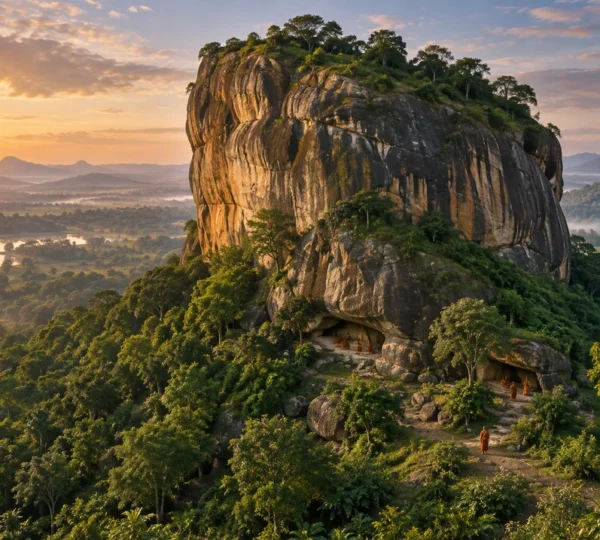
Long before Sigiriya became famous as a royal fortress, the rock and its surrounding landscape were already part of Sri Lanka’s cultural history.
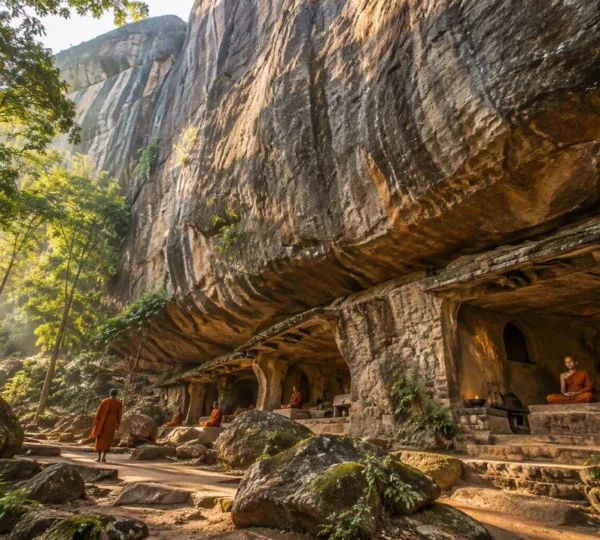
Archaeological evidence from caves at the foot of the rock includes inscriptions associated with early Buddhist monastic communities. These indicate that the area had religious significance centuries before the construction of King Kashyapa’s celebrated royal complex.
Imagine the landscape during this earlier period.
There were no grand palace terraces, no monumental lion entrance and no carefully arranged royal gardens. Instead, the natural rock shelters offered spaces for meditation and religious life.
The rock itself was already extraordinary: elevated above the surrounding plains, naturally protected by its steep sides, and visible across the landscape.
AI images to help visualie Sigiriya rock before it become known as ‘Lion rock fortress’
Its importance did not begin with one king. Rather, successive generations gave the site new meanings, transforming a natural landmark into one of the most remarkable historical places in South Asia.
2. King Kashyapa: The King Behind the Legend
The story of Sigiriya’s royal capital is closely connected with King Kashyapa I, who ruled from approximately 477 to 495 CE.
According to traditional historical accounts, Kashyapa came to power following a violent struggle within the royal family. His father, King Dhatusena, was killed, while his half-brother Moggallana fled into exile.
Fearing that his brother might return to reclaim the throne, Kashyapa established his capital at Sigiriya. The rock offered natural defensive advantages, while the surrounding plains provided space for a carefully planned city.
But why choose a rock?
The answer may lie in the combination of defence, royal authority and architectural ambition.
A palace positioned high above the surrounding landscape would have been difficult to approach unnoticed. Its commanding position also created a powerful visual statement: the ruler’s residence stood above the city, visible from the countryside below.
Sigiriya was therefore more than a place to live. It was a carefully designed expression of royal power.
A Palace Above the World
Picture a visitor approaching the royal city in the fifth century.
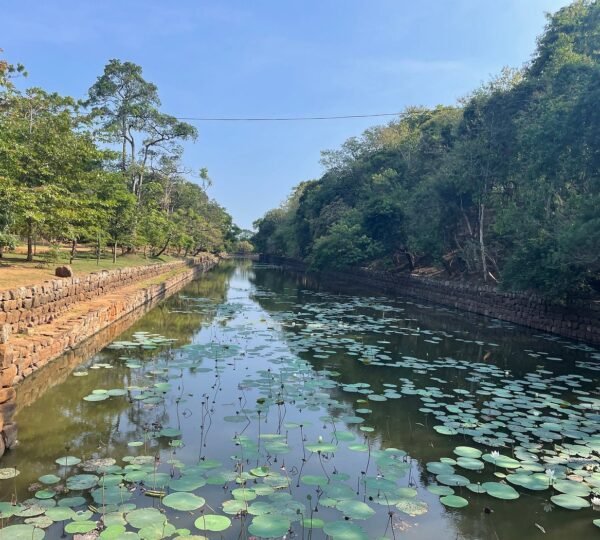
Ahead, enormous walls and moats define the fortified landscape. Beyond them, gardens and water features create a carefully arranged entrance to the royal precinct. Above everything, the enormous rock rises towards the sky.
At the summit, the palace occupies a position unlike an ordinary royal residence.
The king’s world was elevated above the surrounding plains, surrounded by dramatic scenery and protected by the rock’s natural form.
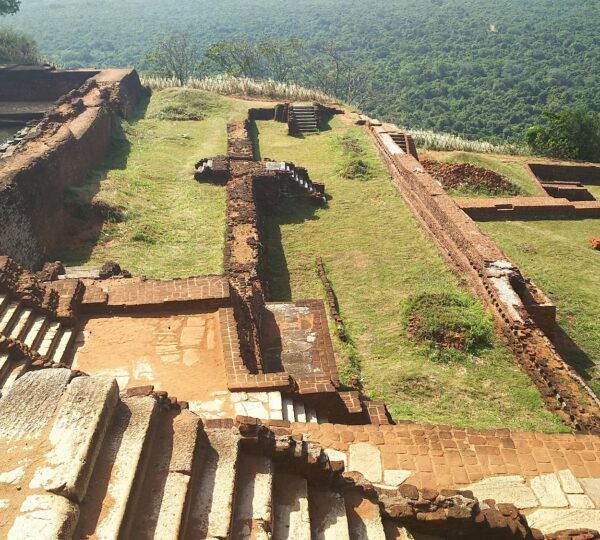
Today, only foundations and structural remains survive in many areas. Yet those remains help archaeologists reconstruct the scale of the complex and understand the extraordinary effort required to build it.
Kashyapa’s reign at Sigiriya lasted less than two decades, but the landscape he helped create has endured for more than fifteen centuries.
3. The City Around the Rock: Ancient Urban Planning at Its Finest
One of Sigiriya’s most impressive qualities is that the palace was not an isolated building placed on top of a rock.
It formed part of a much larger urban landscape.
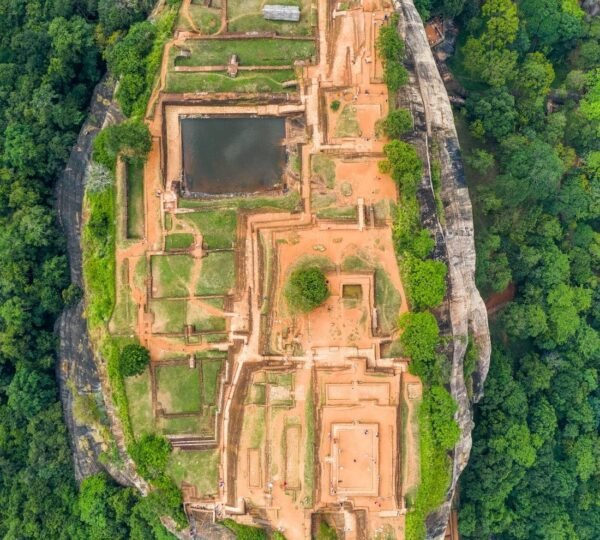
The archaeological site includes the summit palace, terraces, defensive walls, moats, gardens, pathways, water features and other structures distributed across the surrounding terrain.
The design combined geometric layouts with natural rock formations, creating a carefully organised relationship between architecture and the environment.
Geometry Meets Nature
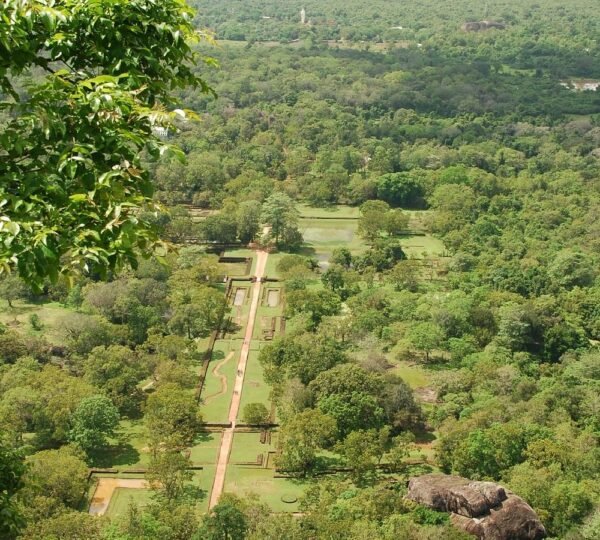
The western gardens are particularly striking because of their symmetrical arrangements.
Pools, pathways and water channels create visual order, while the nearby boulder gardens follow the natural contours of enormous rocks.
Terraced gardens connect different levels of the landscape through stairways and platforms.
Rather than forcing every part of the site into a single geometric pattern, the designers adapted their plans to the environment.
This balance between mathematical organisation and natural forms is one reason Sigiriya continues to interest architects, historians and landscape designers.
A City Designed in Layers
Sigiriya can be understood as a series of connected spaces.
The outer landscape: Defensive moats, walls and approaches helped define the boundaries of the royal precinct.
The gardens: Carefully planned water, boulder and terraced gardens created an impressive approach to the rock.
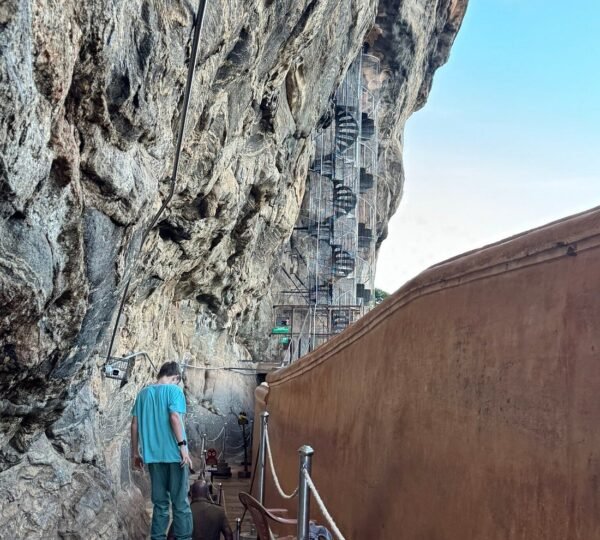
The rock galleries: Stairways and pathways led visitors past frescoes and the famous Mirror Wall.
The Lion Gate: A monumental entrance marked the transition towards the upper palace.
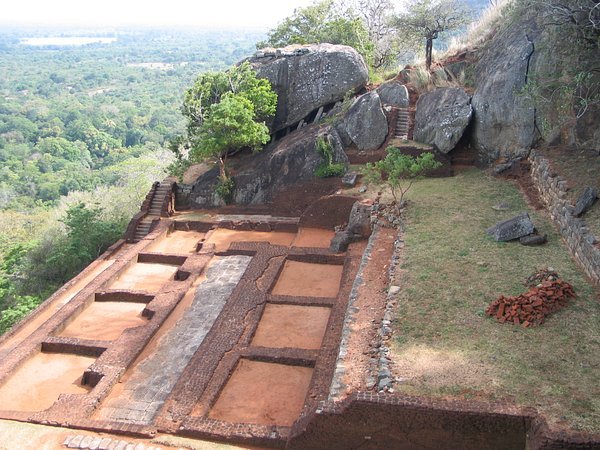
The summit: The highest level contained the remains of the royal complex, including foundations and water-storage features.
Every stage of the journey reveals another aspect of the ancient city.
When you visit Sigiriya today, you are not simply climbing a mountain. You are moving through the surviving elements of a sophisticated urban design.
4. Ancient Water Engineering: How Did Sigiriya Manage Water?
Perhaps the most fascinating question about Sigiriya is how its builders managed water so effectively.
Water was essential for everyday life, royal gardens, pools, drainage and the appearance of the landscaped precinct.
Yet the designers worked in a tropical environment where rainfall could be seasonal and heavy.
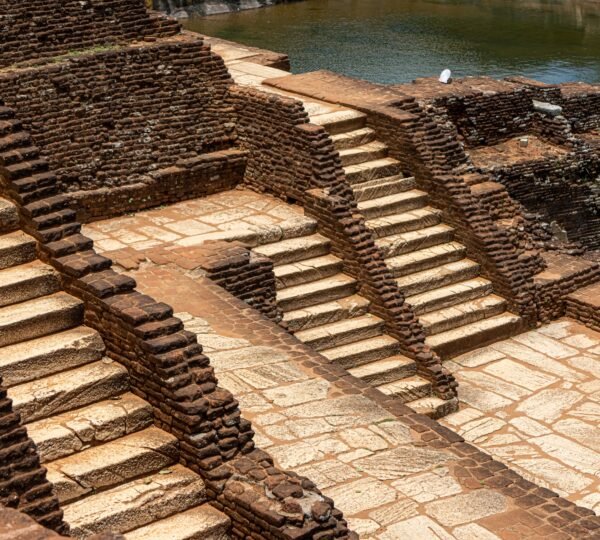
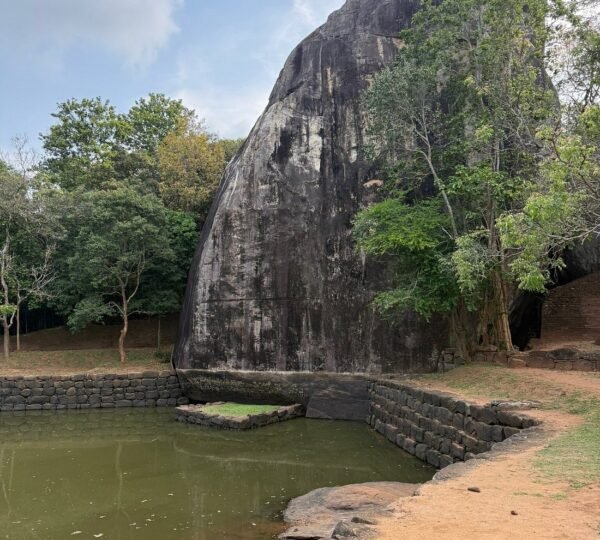
Their solution involved a network of water-retaining structures, channels, pools, reservoirs and underground conduits.
The surviving water gardens demonstrate a sophisticated understanding of how water could be collected, directed, stored and incorporated into an architectural landscape.
The Water Gardens: Beauty with a Technical Purpose
As you walk through the gardens today, the pools and channels may appear decorative.
However, they also reveal the practical knowledge required to manage water across a large designed landscape.
The principal gardens include carefully arranged pools and channels, with fountains supplied through water conduits. Circular limestone fountain plates form part of this system.
During suitable rainy conditions, some of the fountains can still operate.
Think about what this means.
The builders had to understand the relationship between water levels, channel connections, gradients and the movement of water through the garden.
They had to shape and position structures so that water could travel through the system and emerge at selected locations.
These achievements did not require modern electric pumps or computer-controlled systems. They relied on construction knowledge, careful planning, materials, gravity and an understanding of the local environment.
How Could the Fountains Work?
A simplified way to understand the principle is through gravity-fed water movement.
When water is collected at a higher level than its outlet, the difference in elevation creates pressure that can move it through a connected system.
The precise operation of individual ancient features depends on their original design and condition, but gravity and water-level differences are fundamental principles in traditional hydraulic engineering.
Sigiriya’s water gardens show how these principles could be incorporated into a planned landscape.
Underground Water Channels
Not every part of a water system needs to be visible.
Underground conduits can carry water between different areas while keeping the surface landscape organised and attractive.
At Sigiriya, the combination of visible pools, channels and underground water features illustrates how the ancient designers integrated hydraulic systems with garden architecture.
This is particularly interesting from a modern engineering perspective: the functional infrastructure was part of the overall design rather than an unrelated addition.
Rainwater and Drainage
Managing water also means controlling where excess water goes.
In a tropical environment, heavy rainfall can create runoff and erosion, especially on sloping ground.
The wider arrangement of water-retaining features, channels and drainage-related structures reflects the importance of managing water across the royal precinct.
The surviving remains do not reveal every detail of the original system, but they provide valuable evidence of advanced landscape and water engineering.
The real wonder of Sigiriya is that its beauty and engineering were designed together.
The water was not simply there to serve the palace. It helped shape the experience of approaching it.
5. The Lion Gate: An Entrance Designed to Impress
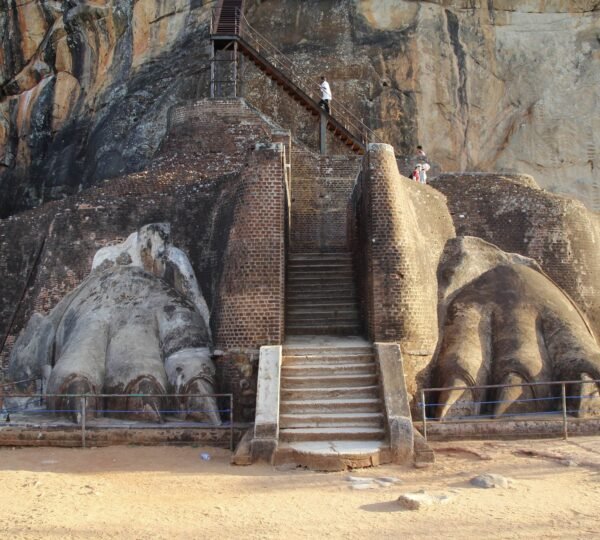
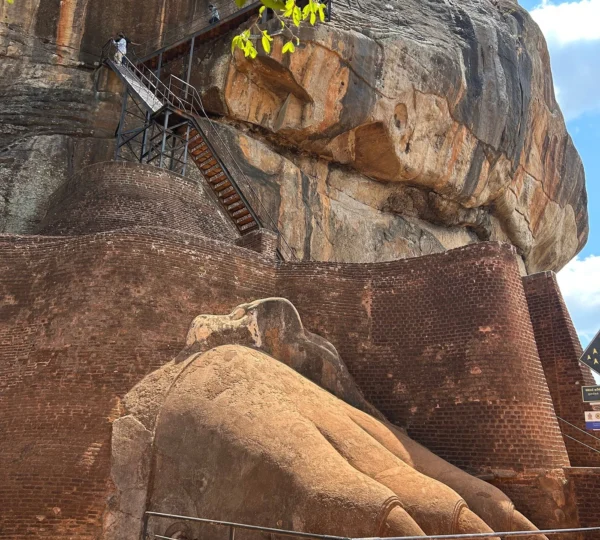
As visitors climb Sigiriya, one of the most recognisable features is the Lion’s Paw Terrace.
Two enormous stone paws remain on either side of the staircase.
They are the surviving lower elements of a monumental lion-shaped entrance that once formed part of the approach to the summit.
The original entrance was far more elaborate than the remains visible today. UNESCO describes the galleries and staircases as emerging from the mouth of a gigantic lion constructed from brick and plaster.
Why a Lion?
The lion was a powerful architectural symbol, creating a dramatic transition between the lower levels and the upper royal complex.
The entrance communicated authority and grandeur before visitors reached the summit.
Its design also explains the name Sinhagiri, commonly translated as Lion Rock.
Imagine approaching this entrance during the fifth century.
Rather than seeing only the stone paws that survive today, visitors would have encountered a monumental architectural feature built around the lion’s form.
The staircase would have led through the creature’s mouth towards the royal residence above.
It was architecture designed not only to control movement but also to create an unforgettable impression.
6. The Sigiriya Frescoes: A Masterpiece of Ancient Art
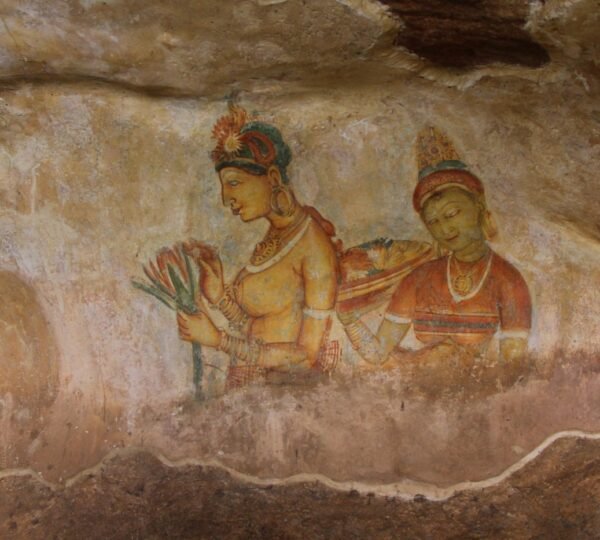
Sigiriya is famous not only for engineering and architecture but also for its remarkable paintings.
The frescoes depict female figures adorned with jewellery and elaborate details. Their artistic quality offers an important insight into the visual culture of ancient Sri Lanka.
Although only a small number of paintings survive today, historical inscriptions and scholarly interpretations suggest that the original painted area may have been much more extensive. The identities and meanings of the figures remain subjects of discussion.
Who Are the Women in the Paintings?
Several interpretations have been proposed.
Some scholars have associated the figures with celestial beings, while other interpretations have considered royal women or figures connected with the palace’s ceremonial world.
The paintings cannot be assigned one definitive meaning simply by looking at them today.
That uncertainty is part of what makes them fascinating: they offer evidence of artistic sophistication while leaving room for continued historical investigation.
The Technology Behind the Paintings
Creating paintings on a difficult rock face required more than artistic talent.
Artists needed suitable pigments, preparation techniques, an understanding of the rock surface and methods of applying colour in a challenging environment.
The surviving paintings demonstrate skill in line, colour, composition and the representation of human figures.
They also remind us that Sigiriya was a centre of artistic achievement, not merely a defensive fortress.
7. The Mirror Wall: A Conversation Across Centuries
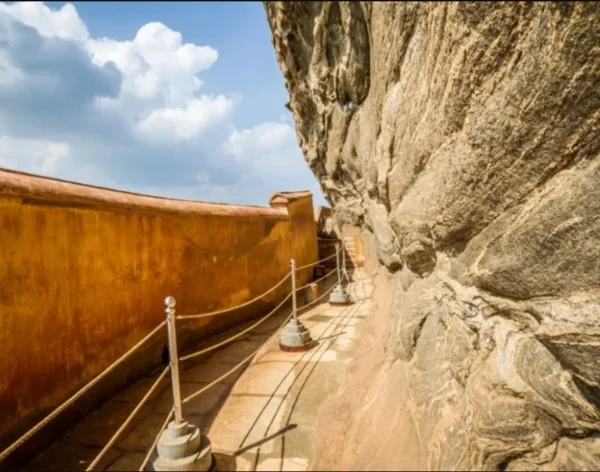
One of Sigiriya’s most unusual features is the Mirror Wall.
The wall was originally finished with a highly polished plaster surface, designed to appear exceptionally smooth and reflective.
Over later centuries, visitors left inscriptions and poetic observations on the wall. These writings are valuable evidence of how people experienced and interpreted Sigiriya long after the royal period.
Imagine visiting the site hundreds of years after Kashyapa’s reign.
The palace was no longer the centre of a living royal capital, yet people still travelled to Sigiriya. Some admired the paintings, while others recorded their thoughts in writing.
Those inscriptions transformed the wall into a kind of historical conversation.
The people who left their words could never have known that their observations would one day help researchers understand the history of language, literature and travel in Sri Lanka.
Today, the wall is protected heritage. Visitors should never scratch, mark or touch its historic surface.
8. Engineering on the Summit: Building a Palace on a Giant Rock
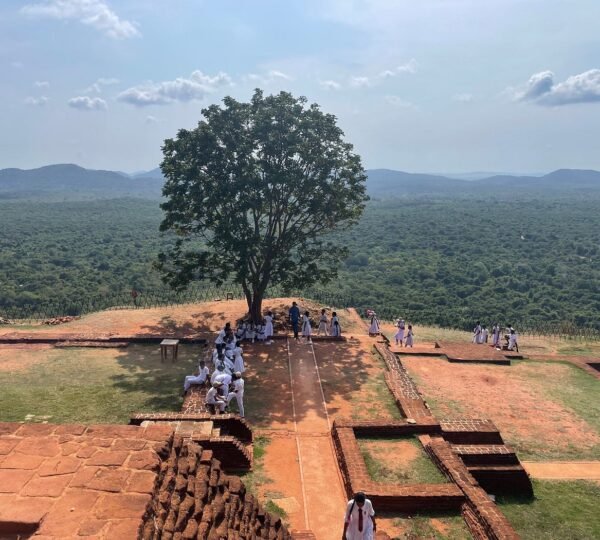
The summit of Sigiriya rises roughly 180 metres above the surrounding landscape.
Its elevated plateau provided a dramatic location for the royal complex, but building there presented substantial technical challenges.
Materials had to be transported to the summit. Buildings needed suitable foundations. Water had to be managed, and usable spaces had to be created on a naturally uneven rock surface.
The surviving palace foundations, terraces and water-related features provide evidence of the scale of the undertaking.
Making Use of the Natural Rock
Instead of constructing an ordinary palace on flat ground, the builders adapted the royal complex to the existing summit.
The rock itself became the foundation of the design.
Natural elevation provided defensive advantages, while the summit offered commanding views of the surrounding countryside.
The arrangement required careful decisions about where to position structures, how to create pathways, and how to connect different levels.
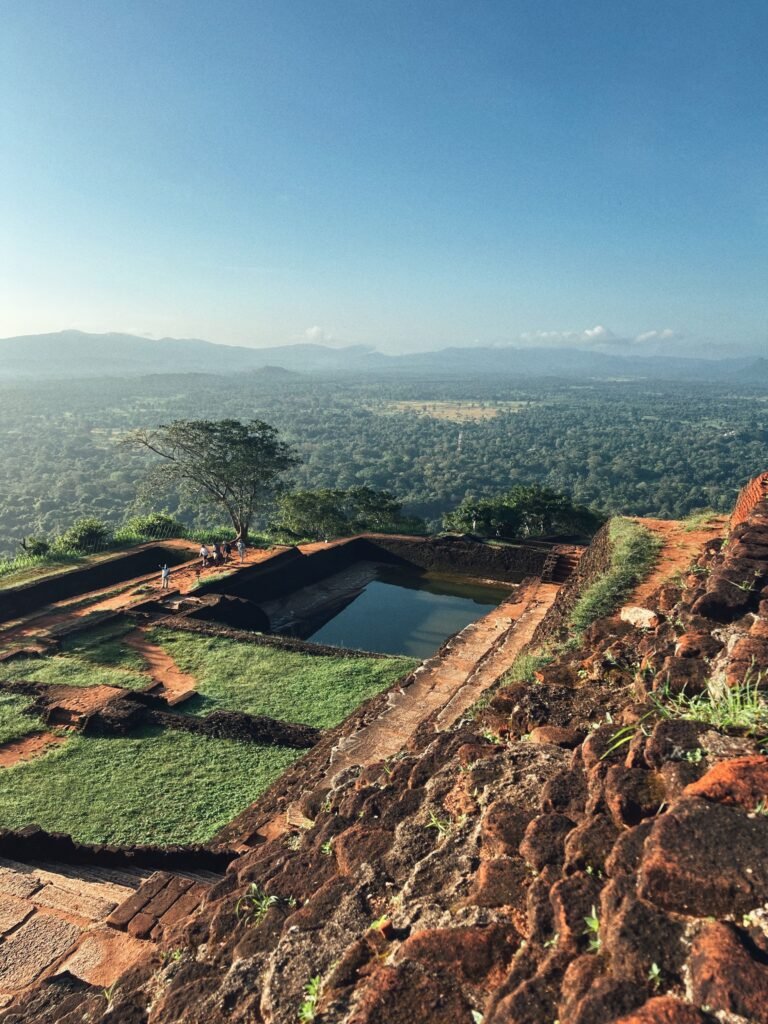
Water Storage at the Top
Water management was essential even at the highest level.
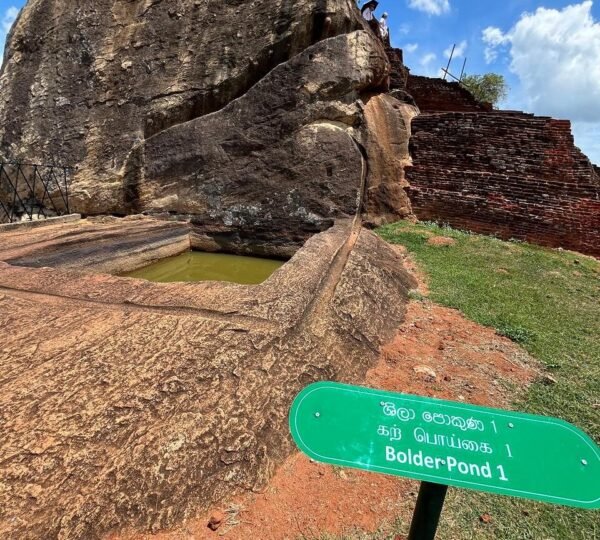
The remains of water-storage features on the summit help demonstrate how the royal complex accommodated water needs in a location far above the surrounding plains.
Understanding the complete original system requires archaeological interpretation, but its surviving elements illustrate the challenges faced by the builders.
Construction Without Modern Machinery
The ancient builders did not have modern cranes, electric pumps, digital surveying instruments or computer-aided design.
Their achievements depended on human skill, organised labour, knowledge of materials, practical surveying and accumulated construction experience.
It would be misleading to assume that every technical detail is fully understood today. Nevertheless, the surviving architecture demonstrates that sophisticated planning and engineering were possible long before modern industrial technology.
Sigiriya reminds us that advanced engineering is not defined solely by machines. It also depends on observation, problem-solving, experience and the intelligent use of available resources.
9. Was Sigiriya a Fortress, a Palace or a Pleasure Garden?
One reason Sigiriya attracts so much scholarly attention is that it cannot be understood through a single function.
It was associated with a royal capital, but its remains also reveal defensive structures, residential spaces, artistic features, religious history and carefully designed gardens.
The site appears to have combined several purposes.
A Defensive Stronghold
The steep rock, surrounding walls and moats created a landscape with defensive advantages.
A Royal Residence
The palace complex and summit structures provided a setting for royal life and administration.
A Landscape of Beauty
The gardens, pools, fountains and carefully arranged pathways demonstrate that visual experience was an important part of the design.
A Cultural and Religious Landscape
Evidence of earlier monastic use and later religious activity shows that the site’s history extended beyond its royal period.
Rather than choosing only one explanation, it is more useful to understand Sigiriya as a complex site where defence, royal authority, art, engineering and landscape design came together.
10. What Happened to Sigiriya After King Kashyapa?
Kashyapa’s reign ended around 495 CE. After his death, Sigiriya’s role as the royal capital changed.
The site became associated with Buddhist monastic activity in the centuries that followed, before gradually losing the prominence it had enjoyed during the royal period.
Over time, buildings deteriorated, vegetation spread across parts of the complex, and the former royal landscape changed.
Yet the rock, gardens, walls and artistic remains endured.
Centuries later, renewed interest in Sri Lanka’s archaeological heritage led to greater attention being paid to Sigiriya. Modern archaeological investigation has helped reveal the organisation of the ancient city and the significance of its surviving features.
What had once been a royal centre became an invaluable source of historical knowledge.
Today, Sigiriya connects visitors with several layers of Sri Lankan history, from early religious communities to royal ambition, later monastic life and modern heritage conservation.
11. Why Is Sigiriya So Special Compared with Other Historical Sites?
Sri Lanka has many extraordinary ancient cities, temples and archaeological landscapes. Sigiriya stands out because so many different achievements are visible within one connected site.
Its natural setting: The rock rises dramatically above the surrounding countryside, creating a landmark that is instantly recognisable.
Its urban planning: The gardens, pathways, defensive structures and summit complex reveal an organised approach to the design of a royal city.
Its hydraulic engineering: Water channels, pools, fountains and water-management features demonstrate the practical knowledge of ancient builders.
Its architectural imagination: The Lion Gate shows how architecture could be used to create a dramatic and symbolic entrance.
Its artistic heritage: The frescoes and Mirror Wall preserve evidence of ancient painting and later literary culture.
Its historical depth: The site includes evidence of human activity before the royal capital and religious use after its royal period.
Its continued relevance: Architects, engineers, historians, artists and conservation specialists can all find something meaningful in Sigiriya.
UNESCO recognised Sigiriya in 1982 because of its outstanding cultural significance. It remains an important example of the achievements of Sri Lanka’s ancient civilisation.
12. The Views from Sigiriya: A Landscape Worth the Climb
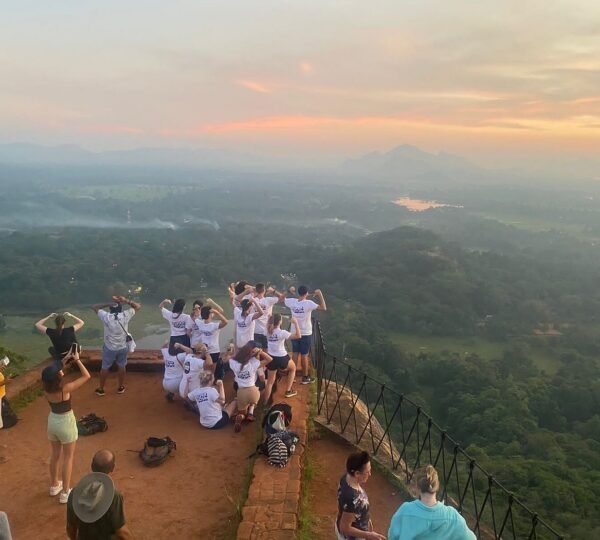
For many travellers, the climb reaches its emotional high point at the summit.
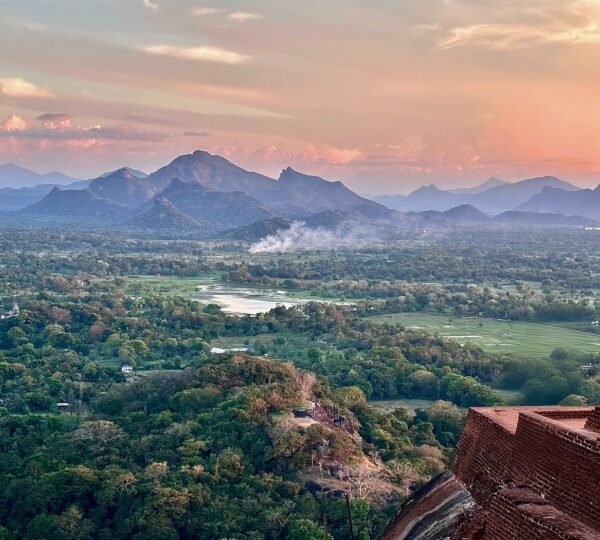
The landscape spreads out in every direction, revealing forests, fields, reservoirs and distant hills.
From above, the surrounding countryside looks almost endless.
But the view is meaningful for more than its beauty. It helps visitors understand why the rock was such a remarkable place to build a royal complex.
Its height, visibility and natural form made it a powerful feature in the landscape.
For photographers, the changing light can reveal different colours and textures throughout the day. For history lovers, the view creates a connection between the archaeological remains and the environment that shaped them.
For anyone who enjoys travel, the summit offers a moment to pause and appreciate the remarkable relationship between people and place.
13. What Can You Explore Around Sigiriya?
The wider region offers many ways to extend your visit.
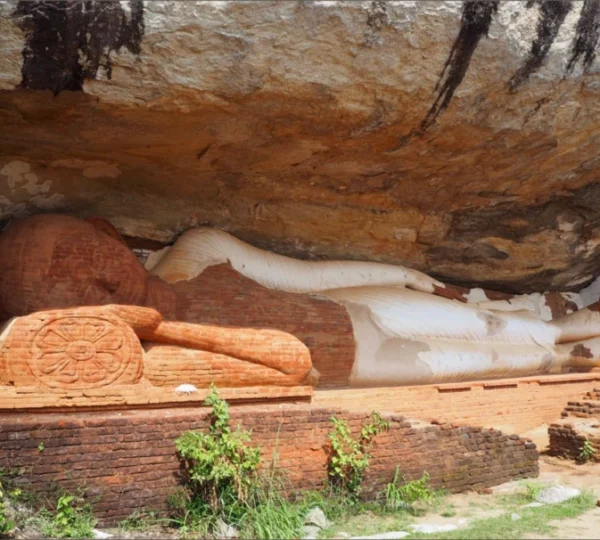
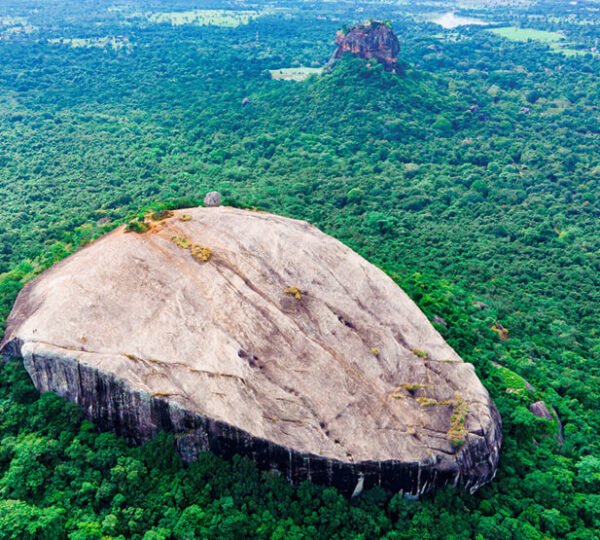
Pidurangala Rock: A popular hiking destination offering a different perspective of Sigiriya and the surrounding landscape.
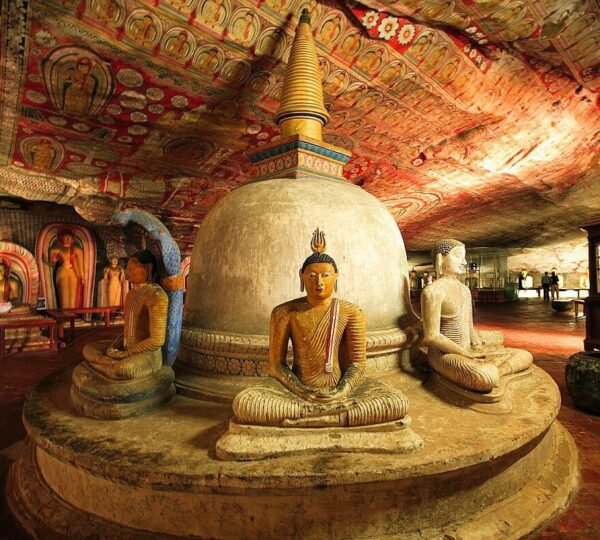
Dambulla Cave Temple: A major religious and artistic site featuring cave shrines, Buddhist statues and historic paintings.
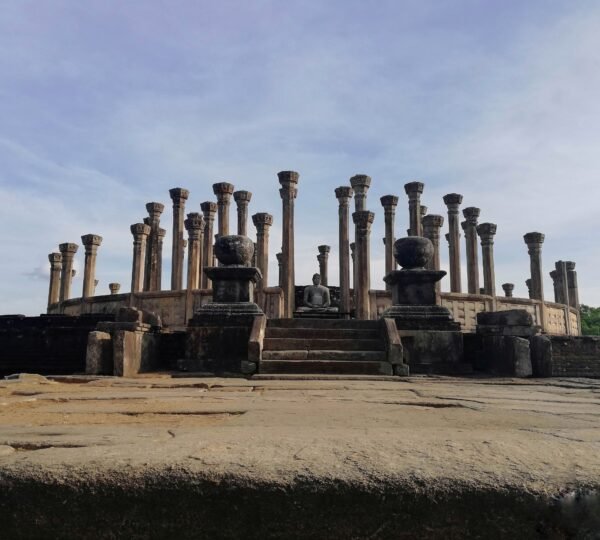
Polonnaruwa Ancient City: An archaeological landscape containing the remains of a historic Sri Lankan capital.
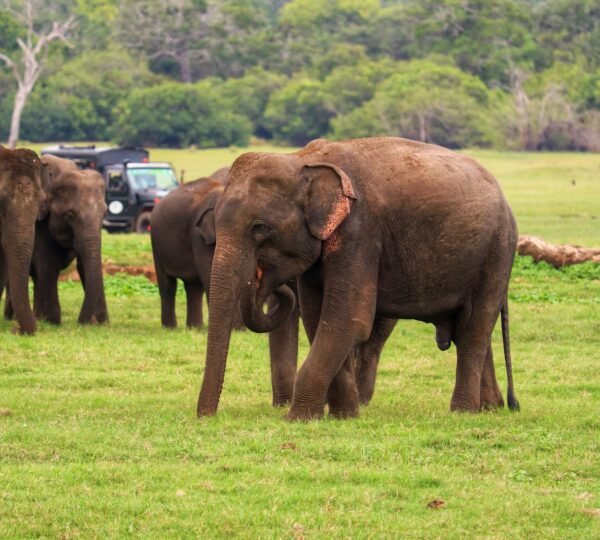
Minneriya and Kaudulla: Wildlife destinations that may offer elephant sightings depending on seasonal movements and conditions.
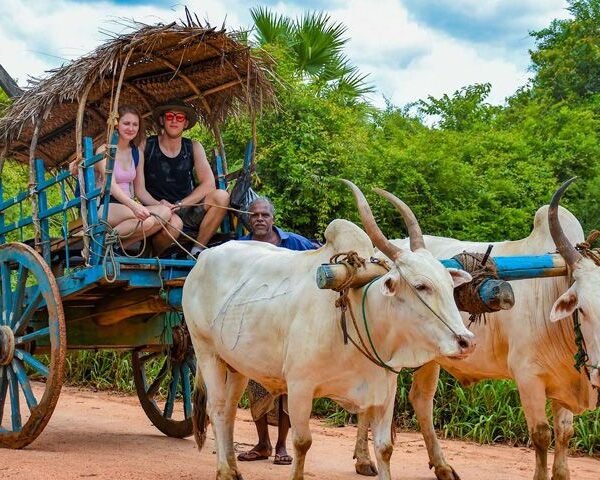
Local villages: Opportunities to experience traditional food, rural landscapes and everyday life through locally arranged activities.
Combining these experiences creates a more complete understanding of the region, connecting ancient history with nature and contemporary Sri Lankan culture.
14. Experience the History of Sigiriya with Lion Peak Experiences
Reading about Sigiriya is one thing. Standing beneath the enormous rock, walking through the ancient gardens, discovering the Lion’s Paws and looking out across the surrounding forests is something entirely different.
At Lion Peak Experiences, we believe travel becomes more meaningful when it connects you with the stories behind each destination.
A visit to Sigiriya can be part of a personalised Sri Lanka journey designed around your interests, available time and preferred travel style.
You could explore the Cultural Triangle, discover traditional village life, experience a wildlife safari, continue towards the misty central highlands, or travel through tea plantations before ending your holiday beside the ocean.
What Can You Experience with Lion Peak Experiences?
Customised Sri Lanka itineraries: Plan your journey around history, culture, nature, adventure or a combination of experiences.
Private car tours: Arrange convenient transport between destinations according to your selected package.
Cultural discoveries: Explore ancient cities, temples, historical monuments and local traditions.
Nature and wildlife: Include suitable safari experiences, scenic landscapes and outdoor adventures.
Mountain and tea country journeys: Discover the beauty of Sri Lanka’s highlands and scenic routes.
Authentic local experiences: Enjoy opportunities to discover Sri Lankan cuisine, village life and local culture.
Flexible travel planning: Create a journey suited to your holiday duration, group size and personal preferences.
Whether you are travelling as a couple, with family, with friends or on a private adventure, Lion Peak Experiences can help you plan a trip that goes beyond simply visiting famous attractions.
Conclusion: Sigiriya Is More Than a Rock It Is a Story of Human Ingenuity
The extraordinary story of Sigiriya begins with a natural rock and the ambition of a fifth-century king.
It continues through the remarkable city built around it, the water systems that shaped its gardens, the monumental lion entrance, the paintings on its walls and the palace remains on its summit.
It is a story of power and uncertainty, but also of artistic skill, engineering knowledge and a sophisticated relationship between architecture and nature.
More than fifteen centuries later, Sigiriya continues to inspire people from around the world.
It reminds us that the achievements of ancient civilisations were not limited by the absence of modern machinery. Through observation, creativity and organised effort, people created places that still challenge our imagination today.
And when you finally stand at the summit, looking out across the green heart of Sri Lanka, the history becomes more than something you read.